EMT Practice Test

1. Question Content...


Question List

Question1: Which of the following driver management settings are maintained in freight order customization?

Question2: There is one order-based transportation requirement (OTR) with the following items (see attached table) the relevant freight unit building rule users. How many freight units will be created?

Question3: You create a freight agreement request for quotation (RFQ) master with seven RFQ items. From three items for which the carrier A is not incumbent, carrier A is removed. Four other carriers are assigned to this freight agreement request for quotation (RFQ) master. You generate the individual freight agreement RFQs. How many individual freight agreement RFQs are created for carrier A?

Question4: Over recent years SAP has made a significant investment in designing and building a best-in-class transportation management solution. This solution will continue to evolve as more functionality is rolled out. Currently, the solution supports the following scenarios for shippers and logistic service providers:
There are 3 correct answers to this question.

Question5: Which of the following incompatibility types can you use in the Automatic and Manual Planning incompatibility area? Note: There are 2 correct Answers to this question.

Question6: Which of the following can you determine using conditions in change management? Note: There are 2 correct answers to this question.

Question7: Which settings can be maintained in the transportation requirement type Customizing?
There are 2 correct answers to this question.

Question8: You run the report to delete a one-time location. After the report is finished, the location is NOT deleted. What could be the reason for this?

Question9: Which of the following strategies can you assign to optimizer settings?
Question10: You can define the SAP TM-relevant hierarchy in Customizing. Choose Transportation Management -► Transportation Network -► Define Transportation Zone Hierarchy.
The following conditions apply when you define a transportation zone hierarchy:
(2 correct answer)

Question11: If a plant, customer, or vendor is transferred from SAP ERP to SAP TM, and a transportation zone is maintained for this object, then during the transfer of master data, the following occurs:
There are 2 correct answers to this question.

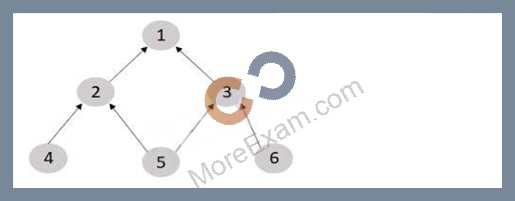
Question12: You have defined the transportation zone hierarchy shown in the attached screenshot. Which transportation lanes can you use to transport from transportation zone 5 to transportation zone 3?
Note: There are 3 correct Answers to this question.

Question13: You want to ensure that the system interprets rates entered into the rate table as percentages. Where can you make this setting?
Please choose the correct answer.

Question14: Which of the following can you use to determine a stage sequence in a forwarding order? Note: There are 2 correct Answers to this question.

Question15: In a buyer's consolidation scenario, which of the following ratios of export forwarding orders to import forwarding orders is valid?
Please choose the correct answer.

Question16: The updated FSD updates the PO and SES in SAP ERP with the revised charges using the SAP ERP update strategy in the settlement profile, as follows:
(3 correct answers)

Question17: When using dispute management, which activities can a carrier perform in the carrier collaboration portal? Note: there are 2 correct answers to this question.

Question18: You want to configure transportation proposals in such a way that carrier selection is NOT executed as part of the process and the result of the process is saved in the stages of the freight unit. What do you have to define in the optimizer settings? Note: There are 2 correct Answers to this question.

Question19: What is maintained in the ERP system, from where it is transferred to SAP TM as locations and business partners using the SAP Core Interface (GIF)?
Please choose the correct answer.

Question20: You have transferred an SAP ERP sales order to SAP TM. An order-based transportation requirement (OTR) was created which automatically created a freight unit.
You now create an SAP ERP outbound delivery for the sales order which is also automatically transferred to SAP TM to create a delivery-based transportation requirement (DTR).
How does this affect the associated documents in SAP TM? There are 2 correct answers to this question.

Question21: How can the optimizer distinguish between currently used and new carriers in a strategic freight procurement process?

Question22: You want to optimize the load that you have planned for one of your trucks. From which of the following can you start the load planning function? Note: There are 2 correct Answers to this question.

Question23: In which transaction can you define transportation durations?

Question24: In which document types can you enable cost distribution in SAP TM?
There are 2 correct answers to this question.

Question25: Which of the following can you determine using conditions in transportation charge management?
Note: There are 2 correct Answers to this question.

Question26: What can initiate the creation of a forwarding agreement quotation?
There are 2 correct answers to this question

Question27: Which documents are created in SAP Materials Management when you transfer a freight settlement document from SAP Transportation Management to SAP Materials Management when cost distribution is NOT enabled? Note: There are 2 correct Answers to this question.

Question28: What can you define in the forwarding order type?
There are 3 correct answers to this question

Question29: Your customer wants to use the cost distribution function to include transportation costs in the material valuation. Which of the following documents can support this requirement? Note: There are 3 correct Answers to this question.

Question30: Master data can only be created directly in SAP TM. determine whether this statement is true or false.

Question31: Different business partners with various relationships to one another exist in the marketplace. Examples of business partners are:
There are 3 correct answers to this question.
Response:

Question32: Which of the following are master data elements in SAP TM? Note: There are 2 correct answers to this question.

Question33: If output has been triggered successfully, two monitoring transactions are available to reveiw the status of message prcessing, as follow (2 correct answer)

Question34: Which of the following are features of the transportation cockpit?
Note: There are 3 correct answers to this question.

Question35: What are generated in SAP ERP and transferred to SAP TM as requirements for planning in the context of shipping? Please choose the correct answer.

Question36: What functionality is achieved by using a handover location from SAP ERP document in SAP TM? Note: There are 2 correct answers to this question.

Question37: You want to calculate an event-based charge. Which of the following master data settings must be maintained for events?
Note: There are 2 correct answers to this question.

Question38: A carrier has an agreement with a shipper on January 1st, for fuel price as 5% of the base freight. Fuel surcharge is pegged to the current price of 3 USD a gallon. The fuel surcharge can change proportionally based on the fuel price on the pricing date. How will you define fuel surcharge calculation in SAPTM? Note: there are 2 correct answers to this question.

Question39: Forwarding house FWH1 is responsible for a forwarding order (FWO). The stages are set up as shown in the attached table 1. In total two freight orders are created for the three stages. The freight charges for execution organization FWH_Ex01 (see attached table 2) are calculated with resolution base 'root'.
If there is an internal agreement based on costs between FWH1 and FWH_Ex01, what is the internal settlement charge owed by FWH1 to FWH_Ex01? (1 correct answer)

Question40: In a shipper-to-logistics service provider (LSP) B2B scenario, both parties are using SAP Transportation Management. Which documents are involved?
Note: There are 2 correct answers to this question.

Question41: Which of the following incompatibility types can you use in the Automatic and Manual Planning incompatibility area?
Note: There are 2 correct answers to this question.

Question42: You have created a forwarding settlement document. What do you need to map to send this document from SAP TM to SAP ERP?
There are 2 correct answers to this question.

Question43: How can a user consider carrier reliability when selecting a carrier for a freight order? Note: There are 2 correct answers to this question.

Question44: If output has been triggered successfully, two monitoring transactions are available to review the status of message processing, as follows:
There are 2 correct answers to this question.

Question45: In what ratio can you assign consignment orders to freight orders?

Question46: You have completed the configuration tasks for cost distribution and freight settlement in SAP Transportation Management and SAP Materials Management. The settlement documents were successfully posted. Which of the following business documents would you check to verify that the amounts and postings are correct? Note: There are 2 correct Answers to this question.

Question47: Which transactions can you use to run the path finder? Note: there are 2 correct answers to this question.

Question48: What is a logical or physical place in which resources are managed on a quantity basis? Please choose the correct answer.

Question49: Which of the following document can you use as a basis for creating freight units? (2 correct answer)

Question50: You have defined several means of transport MT combinations.
If food is loaded on the truck, you cannot transport hazardous goods in a coupled trailer, furthermore, these hazardous goods cannot be transported on certain means of transport.
Which of the following incmpatibility types do you use to model this scenario? (2 correct answer)

Question51: Which of the following are standard integration scenarios between SAP ERP and SAP TM?
There are 3 correct answers to this question. .

Question52: Your company operates its own fleet of trucks. One part of your planning process is the assignment of drivers. To which of the following can you assign drivers in the transportation cockpit? Note: There are 2 correct Answers to this question.

Question53: Which of the following statements apply to packaging units?
Note: There are 2 correct answers to this question.

Question54: What is stored for each business partner role?
Please choose the correct answer.

Question55: To which of the following can you assign a dimensional weight profile?

Question56: In the logistics integration profile, the Incoterm location stage building is set to "Source location to Incoterm location- type 1". You create a sales order in which you have specified an Incoterm and Incoterm location. What will be the result of these settings?

Question57: Purchase order integeration to SAP TM is achived using output control, determine whether this statement is true or false.

Question58: To which of the following document types can you assign change controller strategies? Note: There are
2 correct Answers to this question.

Question59: In which SAP Fiori apps can you define whether business shares are considered in the carrier selection process? Note: There are 2 correct Answers to this question.

Question60: The following settings are defined for a freight order from location A to location B with two freight units:
* The distance between locations A and B in the transportation lane is 1500 km, the duration is 19 hours and the Fix Transportation Duration flag is set. The average speed for the means of transport is defined as 100 km/h and the GIS quality flag is NOT set.
Loading and unloading of each freight unit at locations A and B is defined as 1 hour.
The vehicle resource is available weekdays from 8:00 am to 8:00 pm.
* Loading starts on Monday at 8:30 am. When is unloading finished?
Please choose the correct answer.

Question61: You want to create packages in a freight order using the package building function. Where do you assign the corresponding package building profile?

Question62: What is frequently the leading master data system? (1 correct answer)

Question63: Integration of SAP ERP orders and deliveries facilitates transportation planning and execution in SAP TM based on orders and deliveries created in an SAP ERP system. The orders and deliveries are represented by transportation requirements in SAP TM. Integration with SAP ERP enables you to:
There are 4 correct answers to this question.

Question64: You want to use advanced shipping and receiving. What must you define? Note: There are 2 correct Answers to this question.

Question65: You are planning to use Package Builder to estimate freight volume more accurately for better capacity planning. On what criteria can you base the definition of the package type assignment? Note: There are
2 correct Answers to this question.

Question66: In which object can you track and trace the whole journey of your goods?

Question67: You have two sales orders with three items each for the same customer with the same delivery date. No incompatibilities exist. The following customizing settings are defined: Build freight units automatically Freight unit building rule strategy is "consolidate as much as possible". What is the minimum number of freight units that are created?

Question68: Let's say that you want to define the freight unit building rules that the system uses when dealing with dangerous goods and with goods that are not dangerous. Basically, there are three things to consider, as follows:
There are 3 correct answers to this question

Question69: Which of the following can you send from SAP TM to SAP Extended Warehouse Management for warehouse execution?

Question70: Which of the following SAP TM and SAP ERP objects can you map?
There are 2 correct answers to this question.

Question71: You are not able to create a service entry sheet (SES) in SAP ERP from a freight settlement document. Which of the following element should you check in SAP ERP to identify the error?

Question72: In a shipper-to-logistics service provider (LSP) B2B scenario, both parties are using SAP Transportation Management. Which documents are involved? Note: There are 2 correct Answers to this question.

Question73: What is not necessarily the same customer who receives the goods or is responsible for paying the invoice? Please choose the correct answer.

Question74: What is master data, whether it is created for a one-time purchase or as a partner with whom your organization engages continuously?
Please choose the correct answer.

Question75: How is the freight order type determined for a freight unit that you convert to a freight order using direct shipment options?

Question76: In which of the following areas can you use incompatibilities?
Note: There are 3 correct answers to this question.

Question77: You perform sales order scheduling for a material with enough stock on hand. Which dates on the sales order are updated by SAP TM? Note: There are 2 correct answers to this question.

Question78: What is the cardinality between purchasing organizations and carriers in a freight agreement RFQ master?

Question79: Transportation requirment types can be determined in SAP TM based on conditions, determine whether this statement is true or false

Question80: What do you need to maintain to ensure that certain products are always shipped by air?

Question81: What is an independent organizational unit at a fixed location that processes and monitors inbound and outbound deliveries.
Please choose the correct answer.
Response:

Question82: What is a point-to-point connection option using Web Services? Please choose the correct answer.

Question83: You want to differentiate transportation requirement types in a newly installed SAP TM system based on SAP ERP document types. What do you need to create in SAP TM?
There are 2 correct answers to this question.

Question84: When using dispute management, which activities can a carrier perform in the SAP Logistics Business Network? Note: There are 2 correct Answers to this question.

Question85: You are implementing SAP S/4HANA Supply Chain for Transportation Management. What can be direct predecessor documents for a freight order? Note: There are 2 correct answers to this question.

Question86: You want to configure transportation proposals in such a way that carrier selection is NOT executed as part of the process and the result of the process is saved in the stages of the freight unit. What do you have to define in the optimizer settings?
Note: There are 2 correct answers to this question.

Question87: You have flagged "GIS quality" for your means of transport, LORRY, to calculate distances and durations accurately based on GIS (geographical-information-system). In which of the following apps/customizing tasks can you define durations that impact the scheduling of a freight order using means of transport LORRY? Note: There are 2 correct Answers to this question.

Question88: You have created two freight units for customer A and two freight units for customer B.
You have defined the transportation network (see attached diagram) and no incompatibilities exist. How many freight orders does the optimizer create using only route-based distance costs?

Question89: What is created manually in SAP TM and assigned to the shipping point location? Please choose the correct answer.

Question90: What is created automatically in SAP TM and assigned to the location? Please choose the correct answer.

Question91: You want to configure event based charges. To which document type can you assign an event profile?
There are 2 correct answers to this question.

Question92: Which of the following profiles is directly assigned to an organizational unit?

Question93: Which communication methods can you use in SAP S/4HANA Supply Chain for Transportation Management to interact with a carrier when tendering freight orders? Note: There are 3 correct answers to this question.